
Ley Lines Issue #7: Disney Hotels & Roman Roads

Greetings, Wanderer.
Welcome back to Ley Lines, a regular series of miscellaneous things that I come across that interest, inspire, or intrigue me. Writing these posts is part of an active of being a more conscious consumer of what I read or observe, and is also just ongoing practice of writing and sharing. It’s a bit of a follow up to the “100 Interesting Things” series I wrote last year, and is inspired by Russel Davies’ book Notice, Collect, Share.
1.) The Only Four-Hour Review Of The Now-Closed Star Wars Disneyland Hotel That You Need To Watch Last year Jenny Nicholson release a 4+ hour video on YouTube going into exquisite detail about all of the ways that the “Starcruiser” hotel, that cost approximately $1 billion to build, failed. I’d heard about it at the time, as it made the rounds. But never thought I’d have the time to watch it.
Over the last few weeks, I did find the time And it was absolutely worth it.
Come for the actual hotel review, but stay for the in-depth analysis and critique of the marketing that preceded the hotel launch, the extremely knowledgeable suggestions for what would have experienced
Then stay longer for the absolute roasting that Jenny gives Disney for their wanton and seemingly limitless greed.
Do yourself a favour and watch (or listen) to the entire thing yourself. Jenny is a delight. Her insights are great. Her video is fun. And Disney deserves to be taken down a few notches.
2.) The Recent Encyclical If you’ve been keeping up with the news, you’ll know that Pope Leo XIV recently published an ‘Encyclical,’ (an official letter to Bishops and people of the Church) that was partly about AI.
I don’t think I’m really a fan of Catholicism, or what it’s done, or what it stands for. However, I thought that in the case of this letter there were some really good points made about the importance of first focussing on the greater good for all humanity over profit or anything else.
Some choice lines:
What matters most is not occupying positions of power or defending cultural strongholds, but initiating good processes and enabling them to mature.
And:
Finally, building for the common good requires an evangelical language. We must avoid humiliating or antagonistic words, opting rather for a clarity that sheds light and a frankness that unlocks new possibilities. We cannot condone naïve enthusiasms, nor fuel unfounded fears. Instead, let us establish standards for discernment — the dignity of the human person, the universal destination of goods, the preferential option for the poor, care for our common home and peace — and let us translate these standards into practices such as responsible planning, the assessment of human and social impact, the inclusion of the most vulnerable, the promotion of digital literacy and guiding research and industry toward justice and peace.
And
The spread of global networks, platforms and artificial intelligence systems is changing the way we obtain information, communicate and access services. Justice demands that we prevent the emergence of new forms of exclusion and deprivation of freedoms: individuals and peoples hindered or denied access to basic technologies, communities exposed to invasive surveillance and social groups penalized by opaque algorithms that perpetuate prejudice and discrimination. In the digital age, a just social order guarantees everyone equal access to opportunities, protects the youngest and weakest members of society, combats hate and misinformation and subjects the use of data and technology to public oversight, so that the guiding principle is not solely profit but the dignity of every person and the common good of all people.
Read the full encyclical here. Even if it does bring to mind the old Clickhole meme of “Heartbreaking: The Worst Person You Know Just Made A Great Point.”
3.) WTF Battletech I have a soft spot for extremely niche and nerdy humour. In my Reddit-est moments, I think I might actually like Simpsons Shitposting more than actual Simpsons episodes, particularly when they venture into genre humour.
That interest extends into regular re-reads of the 10+-year old column “WTF D&D” on the the Something Awful forums in with Steve and Zach discuss images in old roleplaying game books.
I think part of the fun comes from being an insider. You have to have deep appreciation and understanding of the source material references to enjoy the jokes. Exhibit A is below, from their take on “The Art Of Battle Technology Magazine,”:
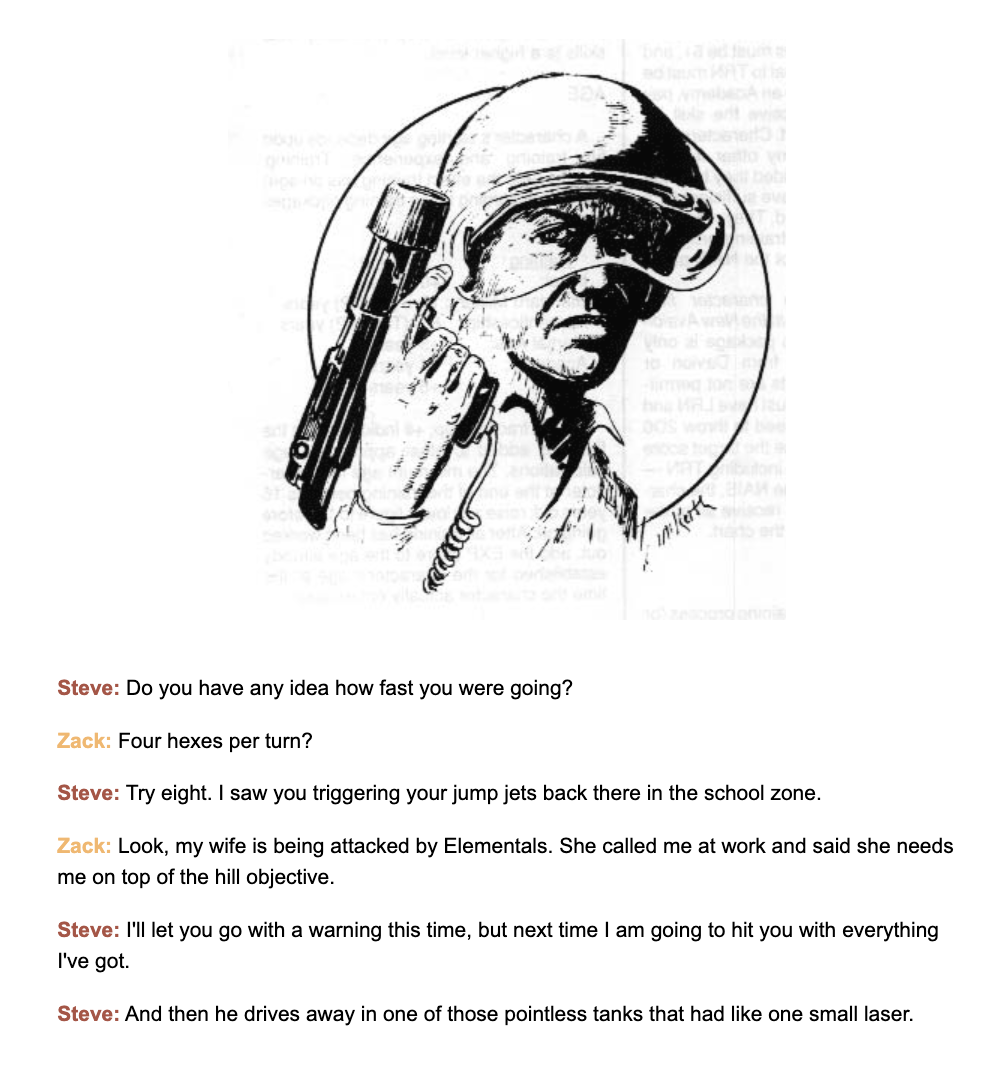
Check out the entire WTF D&D series from Zach and Steven on the Something Awful forums. Even if you weren’t a fan of TTRPGs you’ll likely suffer some nostalgia for the internet of yesteryear just looking at that site.
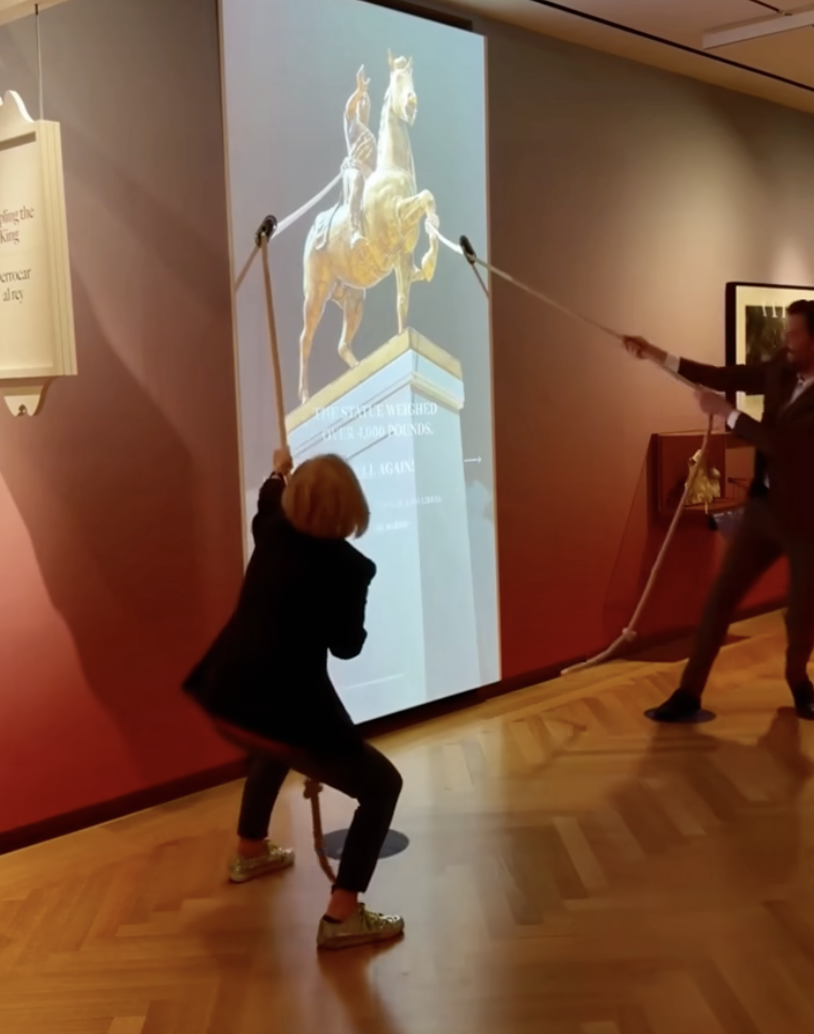
4.) Pull The Rope, Topple The Statue I love art installations or ads that break the fourth wall, and invite participation.
In this case:
Visitors physically pull ropes to bring down a digital statue of King George III. And what makes this brilliant is that it recreates a real moment from 1776, when New Yorkers pulled down the actual statue after the Declaration of Independence was read aloud.
5.) Roman Milestones I get a lot of newsletters, and I occasionally read some of them. This week it happened to be one from Scientific American about how there were far more roads in Ancient Rome than we previously thought. The article goes in-depth into a lot of new tools and imaging that were used to find this, as well as how confident scientists are.
The part I loved was how meticulous the Romans were about marking their roads, and about how many of these markers are still around:
For every 1,000 “paces” (one pace = about 5 Roman feet) on a road, the ancient Romans placed a labeled rock “milestone” to help travelers understand where they were. These milestones have been hugely helpful to modern archaeologists as they retrace the locations of ancient Roman roads. By aggregating databases that include more than 8,000 milestone locations and 14,000 ancient places, the Itiner-e team started their process of connecting these dots into the roads they once were.
There’s something very ley line-esque about that, I think.
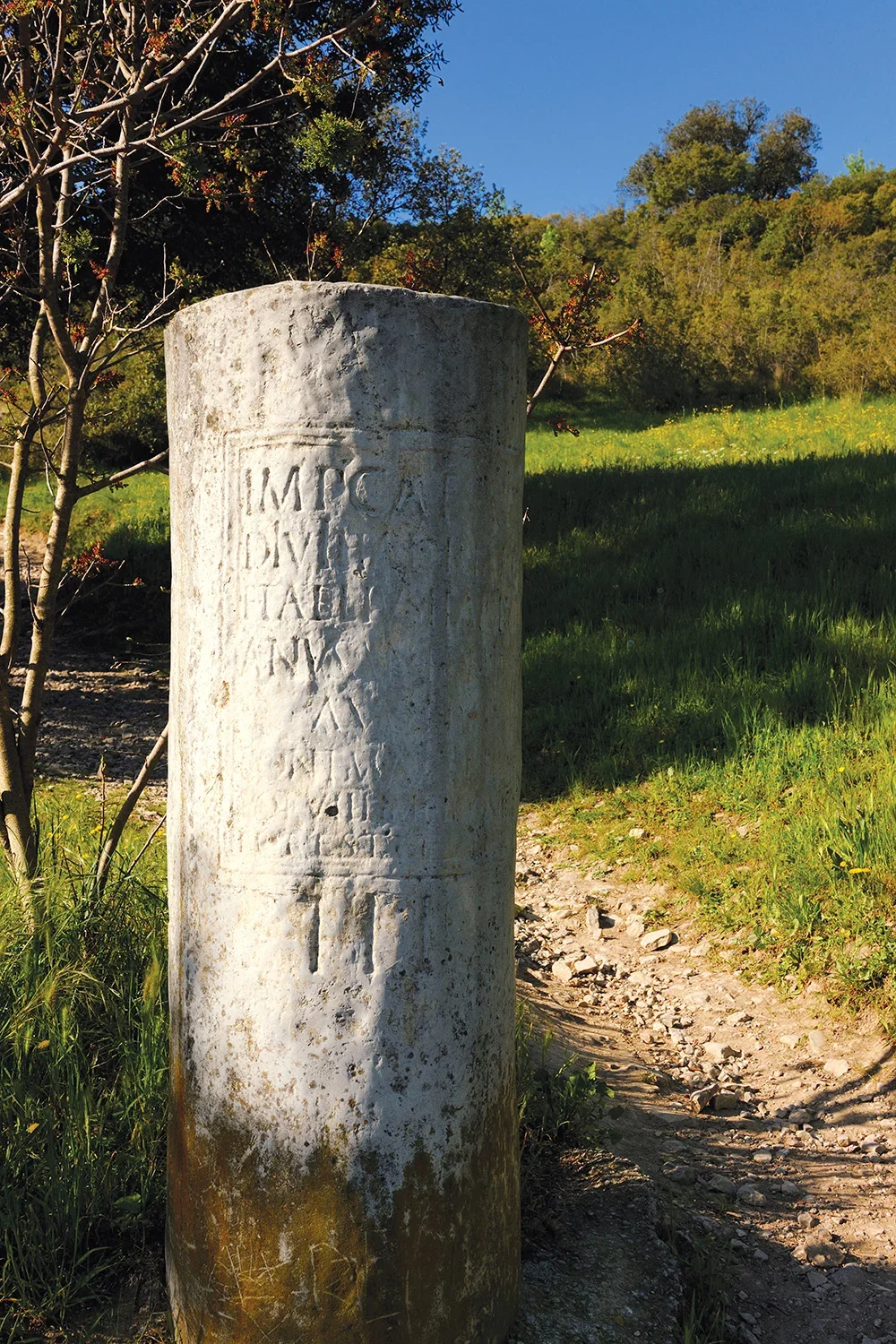
Roman Road Marker.
That’s it for this edition of Ley Lines. Thanks for reading. Or you’re welcome for the content.
If you liked this then let me know - drop me a line here on the site or leave a comment here on the post.

Disney Hotels, Roman Roads, & Giant Battlemechs.